
Rotary Feeding
Rotary Feeding Supplier
Rotary feeding equipment plays an important role in industries where bulk solids need to be transferred from one section of a process to another in a controlled and consistent manner. These machines are commonly installed below hoppers, silos, dust collectors, filters and other storage or separation equipment.
As a Rotary Feeding Supplier, East India Trading Company provide different rotary feeding solutions selected according to material characteristics, capacity requirements and process conditions. Our product range includes Rotary Airlock Valve, Rotary Feeder and Rotary Vane Feeder, giving industries multiple options for regulating the flow of powders, granules and other dry bulk materials. Our solutions are supplied across Kolkata, West Bengal, Bihar, Jharkhand, Assam and Odisha.
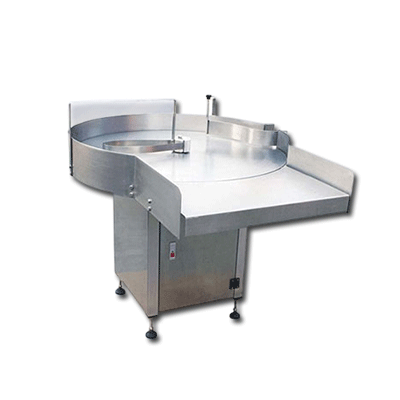
Our Rotary Feeding Product Range
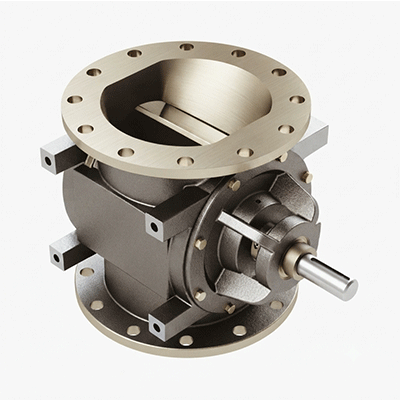
Rotary Airlock Valve
A Rotary Airlock Valve uses a rotating rotor with multiple pockets to move bulk material while helping maintain pressure separation between connected sections of a process system. It is frequently installed beneath hoppers, bag filters, cyclones and dust collection systems.
The valve can assist in controlled discharge while reducing unwanted air movement through the equipment. Depending on the application, rotor configuration, housing construction, drive arrangement and sealing method can be selected according to the material and operating conditions.
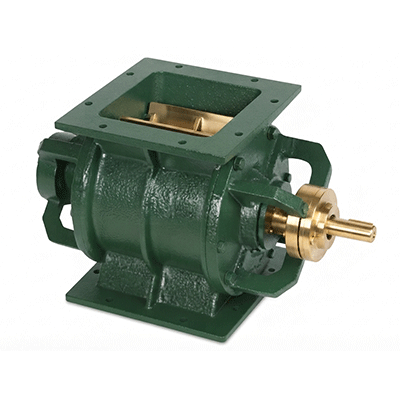
Rotary Feeder
A Rotary Feeder is designed to regulate the discharge of dry bulk materials from storage or processing equipment. Its rotating feeding mechanism provides a measured material flow rather than allowing uncontrolled discharge.
Rotary feeders can be used with materials such as powders, granules, pellets, dust and other free-flowing bulk solids. The required feeder configuration depends on throughput, material density, particle size and installation conditions.
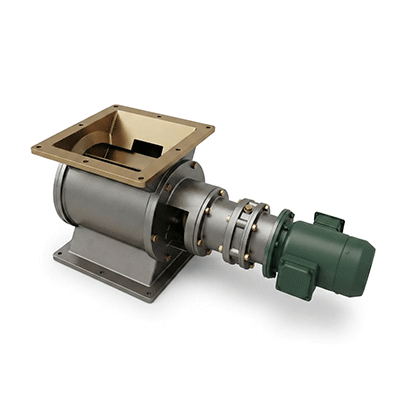
Rotary Vane Feeder
A Rotary Vane Feeder incorporates vanes or pockets mounted around a rotating assembly to carry material through the feeder housing. As the rotor turns, material enters the available pockets and is discharged at the outlet. This arrangement is useful for applications requiring regular feeding of bulk solids. The equipment can be configured around the required capacity, material properties, operating temperature and drive speed.
How Rotary Feeding Equipment Supports Industrial Processes
The basic principle is straightforward: material enters the feeder from the upper section, the rotating element captures a controlled quantity and the material is released at the discharge point.
The actual feeding rate can be influenced by:
- Rotor speed
- Rotor pocket volume
- Material bulk density
- Particle characteristics
- Equipment size
- Motor and gearbox arrangement
- Material inlet and outlet configuration
- Operating conditions
For this reason, selecting the right rotary feeder requires more than simply matching the inlet and outlet size.
Features to Consider When Selecting a Rotary Feeder
Different industrial processes require different feeder configurations. Important selection factors include:
- Required material throughput
- Type and properties of bulk material
- Particle size and flow characteristics
- Material temperature
- Pressure difference across the equipment
- Continuous or intermittent operation
- Required discharge rate
- Drive speed and power requirement
- Housing and rotor material
- Sealing arrangement
- Maintenance accessibility
For abrasive, dusty or difficult-to-handle materials, construction and sealing details become particularly important.
Where Rotary Feeding Equipment Is Used
Rotary feeding systems are suitable for a wide range of bulk material handling applications, including:
- Cement Plants – Controlled discharge of cement, dust and other dry materials.
- Power Plants – Handling of ash, dust and selected dry bulk materials.
- Food Processing – Feeding of powders and granular ingredients.
- Chemical Industries – Metered movement of compatible dry chemicals.
- Pharmaceutical Plants – Controlled handling of selected powdered materials.
- Mining & Minerals – Feeding and discharge of mineral-based bulk solids.
- Fertilizer Industries – Transfer of granular and powdered materials.
- Steel Industries – Handling of dust and process-related bulk solids.
- Plastic & Polymer Processing – Feeding of granules and powders.
- Pollution Control Systems – Discharge from dust collectors, cyclones and filtration equipment.
Rotary Feeding Supplier Focused on Application Requirements
Choosing the right feeder can influence material flow, equipment efficiency and the overall stability of a bulk handling process. A feeder intended for a fine powder may require different considerations from one handling abrasive granules or larger particles. We help customers identify a suitable Rotary Airlock Valve, Rotary Feeder or Rotary Vane Feeder based on their operating conditions. Product selection can take into account capacity, material behaviour, temperature, pressure and installation requirements.
Why Choose Our Rotary Feeding Solutions?
As a Rotary Feeding Supplier, we focus on supplying equipment that matches the practical requirements of the application rather than offering a single configuration for every industry.
Our approach includes:
- Product selection based on process requirements
- Multiple rotary feeding configurations
- Application-oriented technical assistance
- Suitable construction options
- Support for bulk material handling projects
- Supply across multiple industrial locations
- Assistance in identifying the appropriate feeder type
Serving Industries Across Eastern India
Our Rotary Feeding products are available for customers in:
Whether the requirement is for a rotary airlock beneath a dust collector, a Rotary Feeder for controlled material discharge or a rotary vane feeder for bulk solids handling, we can help identify an appropriate solution for the installation.
Frequently Asked Questions
What is rotary feeding?
- Rotary Feeding is a method of moving and regulating dry bulk material through a rotating mechanism. It is commonly used below storage, filtration and process equipment.
What is the difference between a Rotary Airlock Valve and Rotary Feeder?
- A rotary airlock valve is commonly used where controlled material discharge and separation between air-pressure zones are important. A rotary feeder is primarily selected to regulate the movement of bulk material. Depending on the application, the terminology and construction can overlap.
What materials can rotary feeders handle?
- Depending on the feeder design, rotary feeding equipment can handle powders, dust, granules, pellets and other dry bulk solids. The material’s abrasiveness, temperature, moisture and flow characteristics should be considered before selection.
Can rotary feeding equipment operate continuously?
- Yes. Rotary feeders are commonly designed for continuous material handling, provided the equipment is correctly selected for the required duty and operating conditions.
Get the Right Rotary Feeding Solution
Need a Rotary Feeding Supplier in Kolkata, West Bengal, Bihar, Jharkhand, Assam or Odisha? Get in touch with us for your requirement for Rotary Airlock Valve, Rotary Feeder or Rotary Vane Feeder. Share the material type, required capacity, temperature, pressure and installation details to help determine a suitable rotary feeding solution.